
Budget muscle meal prep isn’t just about hitting the weights hard; it’s also about feeding the growth engine consistently. If you’re new to the gym, the idea of planning every bite can feel daunting—especially when you’re watching the wallet. But the truth is, a solid meal‑prep routine can be the single most powerful tool in a beginner’s arsenal for gaining lean mass without breaking the bank.
Thinking of your body like a high‑performance machine, a budget muscle meal prep strategy supplies the steady stream of protein, carbs, and healthy fats needed to repair muscle fibers, replenish glycogen, and keep hormones in check. Skipping meals or grabbing whatever’s on hand can send the machine into a cycle of “eat when hungry” that leaves muscle growth stalled. By setting up a repeatable, budget‑friendly meal‑prep system, you lock in the nutrition you need and free up time to focus on training.
In this post, I’ll walk you through a step‑by‑step strategy that’s simple enough for a beginner, cheap enough for a student, and scalable for anyone who wants consistent muscle growth. Ready to turn the kitchen into your new gym? Let’s dive in.
1. Map Your Macro Goals for Budget Muscle Meal Prep
Before you even pick up a grocery bag, you need to know how many calories and grams of each macronutrient you’re aiming for. A common rule of thumb for muscle gain is 1.0–1.2 grams of protein per pound of body weight, 0.5–0.7 grams of fat per pound, and the rest from carbs. However, the exact numbers depend on your age, activity level, and body composition goals.
A budget muscle meal prep approach ensures your grocery list stays affordable while meeting your macro targets. Let’s walk through a quick example. Suppose you weigh 150 pounds, are moderately active, and want to add lean mass. A 500‑calorie surplus is a safe start, so you’d target around 2,800 calories per day. Splitting that into 30% protein, 25% fat, and 45% carbs gives you:
- Protein: 210 grams (840 calories)
- Fat: 78 grams (702 calories)
- Carbs: 315 grams (1,260 calories)
Now you have a clear target to guide your grocery list and meal prep. Don’t worry if you’re not a math whiz; most calorie‑tracking apps can do this for you in seconds.
Why timing matters: Protein should be spread evenly across meals—aim for 20–30 grams per sitting—to maximize muscle protein synthesis. Carbs around workouts (within a 90‑minute window) help replenish glycogen and support recovery. Fats are best consumed in the evening or with meals that have high protein to aid absorption.
2. Build a Grocery List for Budget Muscle Meal Prep
Once you know your macro targets, you can reverse‑engineer a list of budget‑friendly foods that hit those numbers. The trick is to prioritize items that are high in protein or carbs but low in cost per serving.
Here’s a sample list that covers a week’s worth of meals for a single person:
- Protein sources: Chicken thighs (cheaper than breasts), eggs, canned tuna, lentils, chickpeas, Greek yogurt (store brand), whey protein isolate.
- Carb sources: Brown rice, oats, sweet potatoes, frozen mixed veggies, whole‑grain pasta, frozen fruit for smoothies.
- Fat sources: Peanut butter, canola or sunflower oil, nuts (buy bulk), avocado.
- Miscellaneous: Spices, soy sauce, canned tomatoes, onions, garlic, canned beans, canned corn.
To keep prices down:
- Buy in bulk: Rice, oats, and beans are cheaper when bought in larger quantities. Many grocery stores offer bulk bins for a fraction of the packaged price.
- Shop seasonal: Fresh produce prices vary seasonally. Frozen veggies are a great fallback; they’re often cheaper and just as nutritious.
- Use store brands: Store‑brand whey and canned goods usually match national brands in quality but cost less.
- Plan for leftovers: Cooking large batches means fewer trips to the store and less waste.
When you’re ready to shop, keep a copy of your meal plan handy to avoid impulse buys. Stick to the list and you’ll see your grocery bill shrink without sacrificing nutrition. For more ideas, check out our nutrition and meal plans.

3. The Batch‑Cooking Workflow That Saves Time and Money
Meal prep is about efficiency. Below is a streamlined workflow that lets you cook for the entire week in one or two sessions, keeping you on track and on budget.
A. Choose Simple, Versatile Recipes
Pick recipes that use a handful of ingredients and can be tweaked for variety. For example, a base of chicken, rice, and veggies can be seasoned differently each day to keep meals interesting. A simple “one‑pot” chili or a sheet‑pan dinner with turkey and sweet potatoes also works well.
B. Cook in Stages
- Protein batch: Roast or grill all your chicken thighs at once. You can also poach eggs or cook a big batch of scrambled eggs for quick breakfasts.
- Carb batch: Cook a large pot of rice or bake several sweet potatoes. If you’re using oats, pre‑portion them into single servings.
- Veggie batch: Steam or roast a mix of frozen veggies. A single batch can be used in salads, stir‑fries, or as side dishes.
- Prep sauces and seasonings: Mix up a large batch of teriyaki or a simple olive oil and lemon dressing. Store in small containers to add flavor without extra cost.
Doing each category separately keeps cooking time short and reduces the chance of burning something. It also allows you to adjust seasoning after you see how the flavors develop.
C. Portion Control with Simple Containers
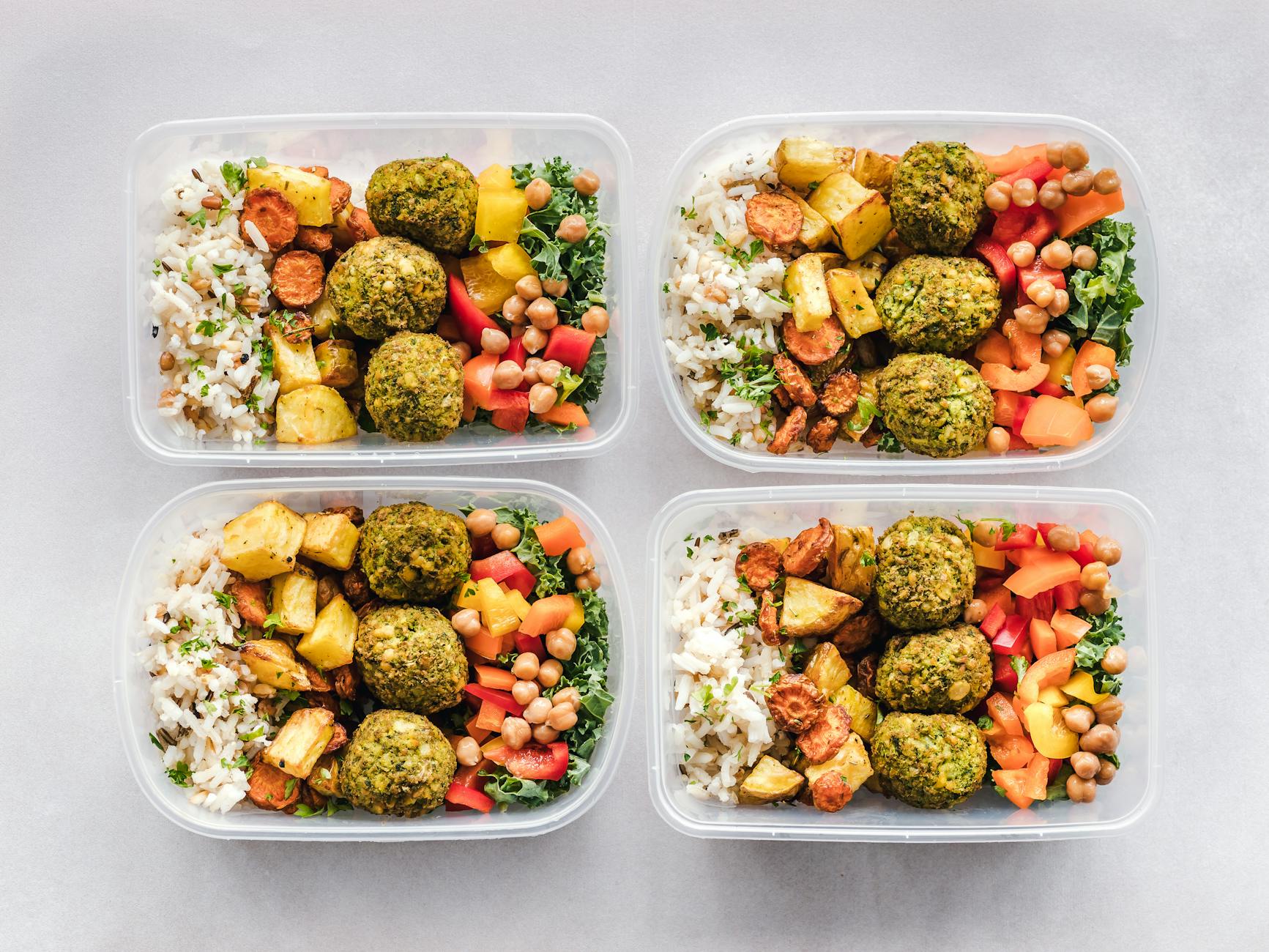
Invest in a set of reusable containers that fit in your fridge or freezer. A 1‑quart size works great for individual meals. Label each container with the meal name and date to avoid confusion. If you’re on a tight budget, a plastic container set from a discount store will do the job.
When you’re ready to eat, just grab a container, heat it in the microwave, and you’re good to go. No more guessing portion sizes or wasting food.
D. Add a “Grab‑and‑Go” Snack Option
Keep a few protein‑rich snacks on hand for post‑workout refueling. A protein shake (made with whey and a banana), a hard‑boiled egg, or a handful of nuts are all easy to pack and inexpensive. Having these options reduces the temptation to reach for junk food when you’re hungry.
![Close-up of a delicious sautéed chicken dish with bell
<!--[googlesitekit-end-of-content]-- data-eio=](https://images.pexels.com/photos/13065207/pexels-photo-13065207.jpeg?auto=compress&cs=tinysrgb&dpr=2&h=650&w=940)