
Creating a budget home gym that actually works for you doesn’t have to mean buying a wall‑to‑wall wall of machines or breaking the bank. In fact, the most effective setups are often the simplest, built around a few key pieces that can be moved, swapped, or upgraded as your goals evolve. If you’re a beginner on a tight budget, the biggest challenge is figuring out how to turn a spare bedroom, a garage corner, or even a hallway into a space that lets you lift, stretch, and recover without stepping out the door.
Think about the last time you tried to hit the gym and felt rushed, overwhelmed by the equipment, or just not sure how to keep your training consistent. A well‑planned home gym removes those obstacles. It gives you control over the environment, saves time, and lets you focus on the fundamentals of muscle building—progressive overload, proper form, and recovery—without the noise and wait times of a commercial facility. A budget home gym lets you customize workouts without costly memberships.
Below you’ll find a step‑by‑step guide that walks you through measuring your space, picking equipment that covers the most movement patterns, and adding smart, budget‑friendly tweaks that keep the setup flexible for years to come. When planning a budget home gym, prioritize multi‑functional gear that offers the most bang for your buck. Ready to turn that unused corner into a personal strength studio? Let’s dive in.

Know Your Space and Goals for a Budget Home Gym
The first step is to treat your home gym like any other project: you need a clear plan before you buy a single piece of gear. Grab a tape measure, a notebook, and a pen. Start by measuring the floor area, ceiling height, and any obstructions—doorways, windows, HVAC vents. A good rule of thumb is that a 12‑by‑12‑foot square is the minimum for a full‑body workout with a power rack, bench, and a couple of free‑weights.
Ask yourself what you want to achieve. Are you looking to build muscle mass, increase strength, or simply stay active? Your goals dictate the equipment you’ll prioritize. For muscle building, a barbell and adjustable dumbbells give you the most versatility. If you’re leaning toward functional or cardio‑heavy training, a kettlebell set and resistance bands might be more useful.
Consider the noise level and how much space you’re willing to dedicate. A small apartment might not allow a heavy barbell set, but a squat rack that doubles as a pull‑up bar can fit in a narrow space. Think about how often you’ll use each piece and whether you can store it when not in use. If storage is a concern, look for equipment that can be stacked or folded.
Key Takeaway: Start with a clear picture of your space and your training goals. This will prevent you from buying gear that ends up unused or causing layout chaos.
Core Equipment for a Budget Home Gym
Once you know what you need and where you’ll put it, focus on a small set of essentials that cover most major lifts. A well‑chosen core lineup can produce a full‑body program that mimics a commercial gym’s variety. For more budget gym gear ideas, explore our curated selection.
- Barbell + Weight Plates – A standard 45‑lb barbell is a cornerstone. Pair it with a set of plates that let you work from 5 lbs up to 45 lbs or more. If you’re limited on space, consider a rack that can hold the bar vertically to save floor area.
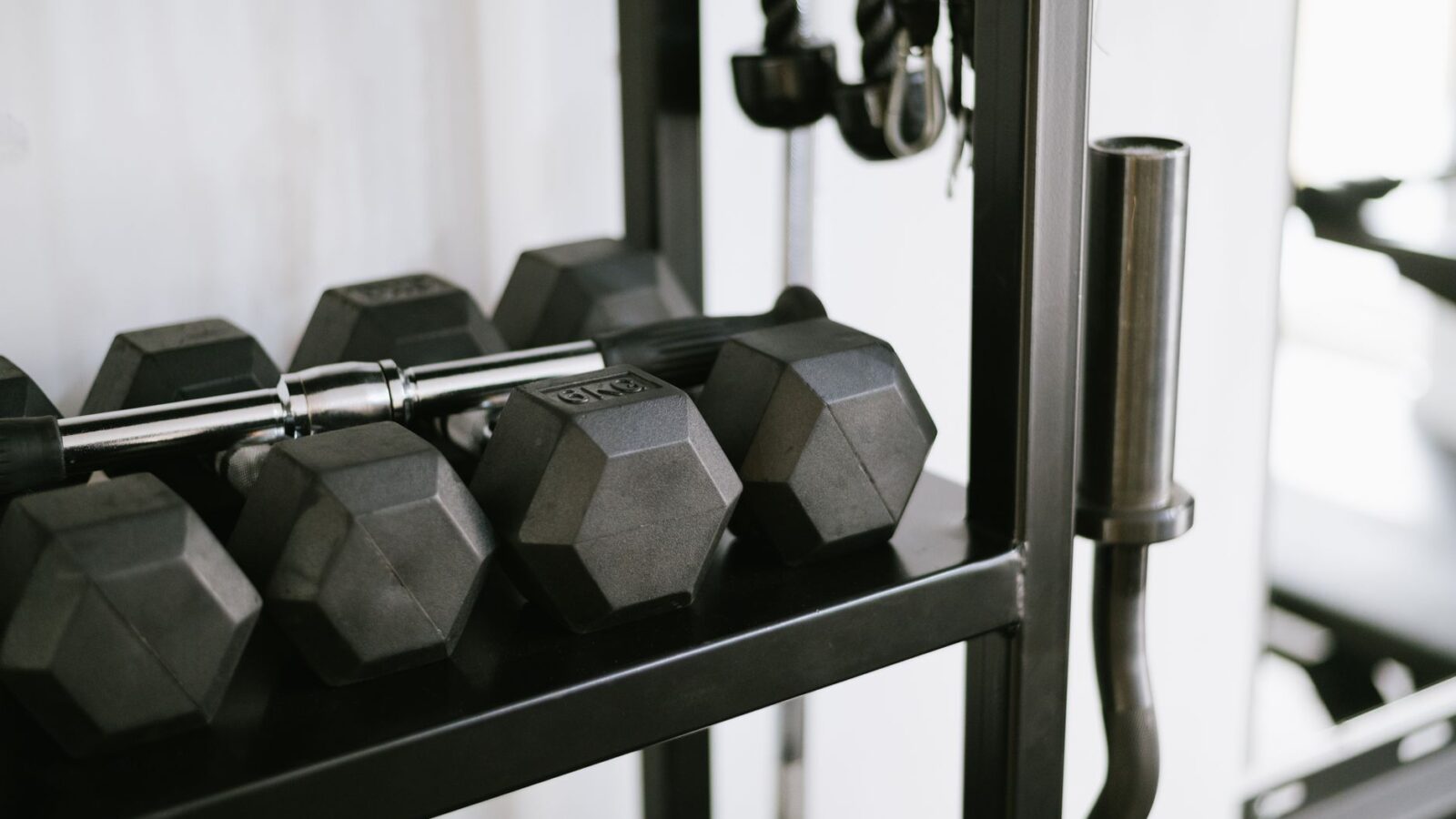
- Adjustable Dumbbells – Instead of buying a full set of fixed weights, an adjustable pair can replace 10–15 individual dumbbells. They’re compact, stackable, and allow for incremental increases as you grow stronger.
- Power Rack or Squat Rack – A rack isn’t just for squats; it can hold a bench, provide a pull‑up bar, and support a variety of accessory exercises. Look for a model with adjustable safety bars to keep your workouts safe.
- Flat/Incline Bench – A sturdy bench with an adjustable angle lets you perform presses, rows, and seated work. Choose a bench with a removable backrest if you need extra floor space for other moves.
- Pull‑Up/Dip Bar – Many racks come with a pull‑up attachment, but if yours doesn’t, a door‑frame bar is a cheap alternative that still offers a great vertical pulling stimulus.
- Resistance Bands – These are inexpensive, portable, and great for adding load or assisting in pull‑ups, dips, or for warm‑up mobility work.
- Flooring – Rubber mats or a simple gym mat protect your floor and give you a stable base. They’re easy to roll out and store.
With these pieces, you can execute the classic lifts: squats, bench presses, deadlifts, rows, overhead presses, and pull‑ups. Add a few dumbbell variations and you’ve got a full program that can grow with you.
Tip for Space Savers: Choose a power rack that folds or collapses when you’re not using it. Some models have a vertical design that takes up less floor space than a traditional squat rack.

DIY and Budget‑Friendly Additions to Maximize Space
Now that you have the core, you can start thinking about ways to expand your routine without buying a new machine every month. The most effective DIY upgrades are those that add versatility or improve safety while staying cheap.
- Wall‑Mounted Cable System – Using a heavy‑duty door frame and a few pulleys, you can create a simple cable row or lat pulldown. Attach a resistance band to a door anchor, or use a commercial cable pulley kit that attaches to a power rack. This gives you a vertical pulling movement without a full cable machine.
- Weighted Vest or Backpack – A backpack filled with sandbags or a weighted vest can add resistance to bodyweight moves like push‑ups, pull‑ups, or lunges. These are inexpensive and can be removed or added as needed.
- Floor‑Mounted Pull‑Up Bar – If you don’t have a power rack, install a sturdy pull‑up bar in a doorway. Look for a model that can support at least 250 lbs. You can also add a dip station to the same frame.
- Repurposed Furniture for Support – A sturdy wooden table or a sturdy bench can double as a platform for overhead presses or a place to sit for triceps extensions. Make sure it’s stable and can handle the load.
- DIY Plyo Box – Use a plywood frame and foam or rubber pads to create a box for jumps or step‑ups. This adds a cardio and plyometric dimension to your routine.
- Foam Roller & Mobility Tools – A foam roller, yoga strap, or a simple set of stretch bands can help with recovery and flexibility, which are essential for muscle growth.
These additions keep your gym functional without a heavy price tag. Plus, they’re easy to assemble and can be taken down if you need to free up space later.
Pro Tip: Use a heavy-duty storage rack to keep your adjustable dumbbells and plates off the floor. This not only saves space but also protects your equipment from dust and damage.

Common Pitfalls and How to Avoid Them
Even with a well‑planned